Play your song straight after one by an artist you like and yours sounds small. So you want it louder, and the first tool people name is the maximizer.
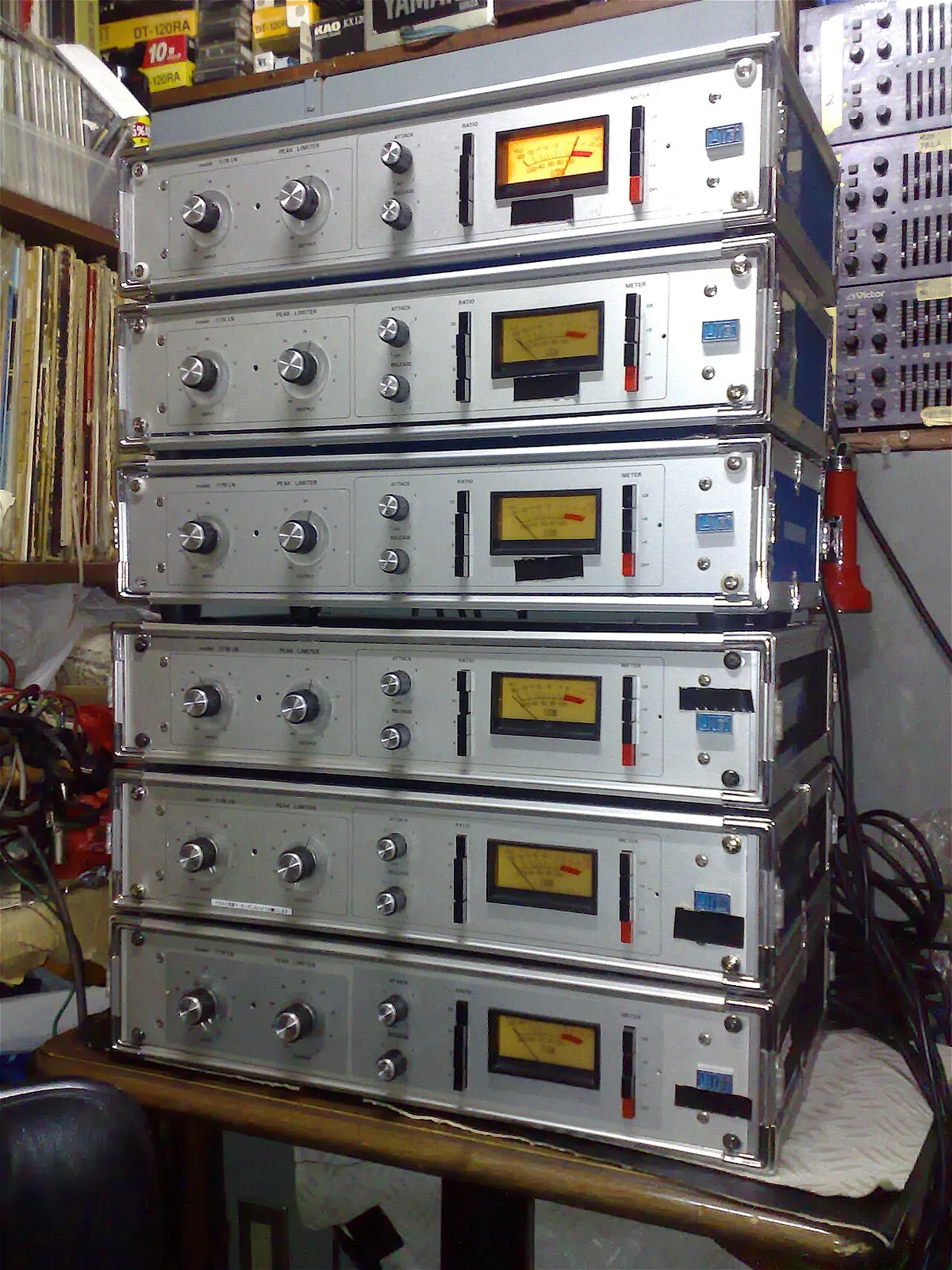
In one line, a maximizer is a tool that holds the peaks down with a limiter and raises everything else by the same amount, so the track sounds louder.
What a maximizer does
Turn a track up and its biggest peak goes over 0 dB and clips. A maximizer does two things at once: holds the peaks down with a limiter, then raises the whole track into the room that frees up.
Most have just two controls: how far to push (threshold, input or gain, depending on the maker) and where to stop (the ceiling). Inside it is nearly the same as a limiter. Think of it as a limiter with the “louder” control up front.
Loudness, not just level
How loud a song feels is not the same as its peak level. With the same peak, the song with less difference between loud and quiet sounds much louder.
That felt loudness is measured in LUFS. The measurement weights frequencies the way hearing does, and is set by an international standard, ITU-R BS.1770. The average over the whole song is called “integrated”; “this track is −14 LUFS” normally means that.
Streaming services even out the volume
This is the part that matters most. Many streaming services measure each track and adjust the playback volume so tracks match (loudness normalisation). Spotify says it normalises to −14 LUFS.

So a track pushed to −8 LUFS gets turned down by about 6 dB on playback. What is left after that is a squashed sound with no difference between loud and quiet. Next to a track that kept its dynamics, it sounds flatter and weaker, not stronger.
How loud to go
| Use | Starting point |
|---|---|
| Streaming (Spotify, YouTube and so on) | Around −14 LUFS, true peak at −1 dBTP or below |
| Video background music, under speech | Around −14 to −16 LUFS; quieter if the voice is the point |
| Club or loud-playback use | Sometimes −9 to −12 LUFS, at the cost of dynamics |
What matters more than the number is not overdoing it. Check whether you reach your target while the maximizer’s GR stays at a few dB on the loudest moments. If it can’t, fix the peaks in the mix first.
Signs of pushing too far
- The kick goes from “boom” to “tick”. Its peak is being shaved off.
- The chorus no longer gets bigger. The gap to the verse has gone, and the lift with it.
- The top end sounds gritty. The limiter can’t keep up and it is distorting.
- It is tiring to listen to. Sound with nowhere to rest wears your ears out quickly.
Summary
- A maximizer is a limiter that holds the peaks and raises everything else.
- Felt loudness is measured in LUFS, and streaming services even it out on playback.
- For streaming, start at −14 LUFS and −1 dBTP. Squashing it louder only gets it turned down.
- Too far sounds like a weak kick, a flat chorus, distortion and fatigue.
The whole finishing process, from EQ to limiter, is in mastering basics.