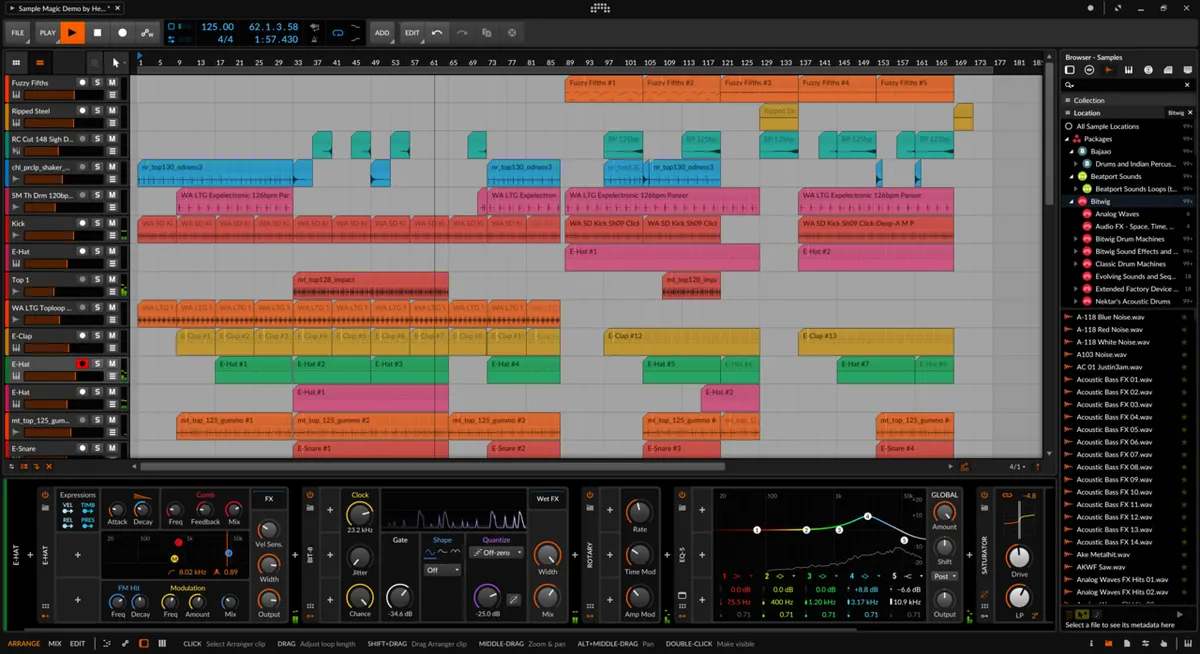
Search for “the most used DAW” and every article gives a different answer. None of them is necessarily wrong. They asked different people.
A DAW (digital audio workstation) is the software you record, edit and mix music in. Here we line up the numbers from three surveys published in 2025, exactly as published. The point is not an affiliate ranking but reading each number together with who was asked.
The three surveys
| Survey | Who answered | How many | What was asked |
|---|---|---|---|
| DTM Station (2025) | Readers of a Japanese music-production news site | 2,185 votes | Web poll: “Which DAW do you mainly use?” |
| Sleepfreaks (2025) | Users of a Japanese music-production learning site | 3,222 people | Year-end survey counting each person’s main DAW only |
| Production Expert (2025) | Readers of an English-language media site for recording and production pros | 2,500+ | Annual DAW survey (figures checked via a secondary report) |
The numbers side by side
| DAW | DTM Station | Sleepfreaks | Production Expert |
|---|---|---|---|
| Cubase | 23% (incl. Nuendo) | 36.9% | 5.5% |
| Studio One | 17% | 18.7% | 8.4% |
| Logic Pro | 16% | 18.1% | 12.6% |
| Ableton Live | 10% | 9.0% | 5.9% |
| FL Studio | 4% | 5.5% | — |
| Pro Tools | 4% | about 3.4% (111 people) | 37.2% |
Why the answers differ
- Ask producers in Japan and Cubase leads. Both Japanese surveys agree: Cubase first, then Studio One and Logic. Cubase’s maker Steinberg is part of the Yamaha group, and light versions bundled with Yamaha and Steinberg audio interfaces give it a lot of entry points.
- Ask recording and mixing pros and Pro Tools leads. Production Expert’s readers are mostly people who record and mix in studios, where Pro Tools has long been the standard.
- Genre matters too. More than half of Sleepfreaks’ respondents make vocal-led music such as J-pop and band music. Ask where electronic producers gather and Ableton Live or FL Studio would rank much higher.
Choose by your situation, not by rank
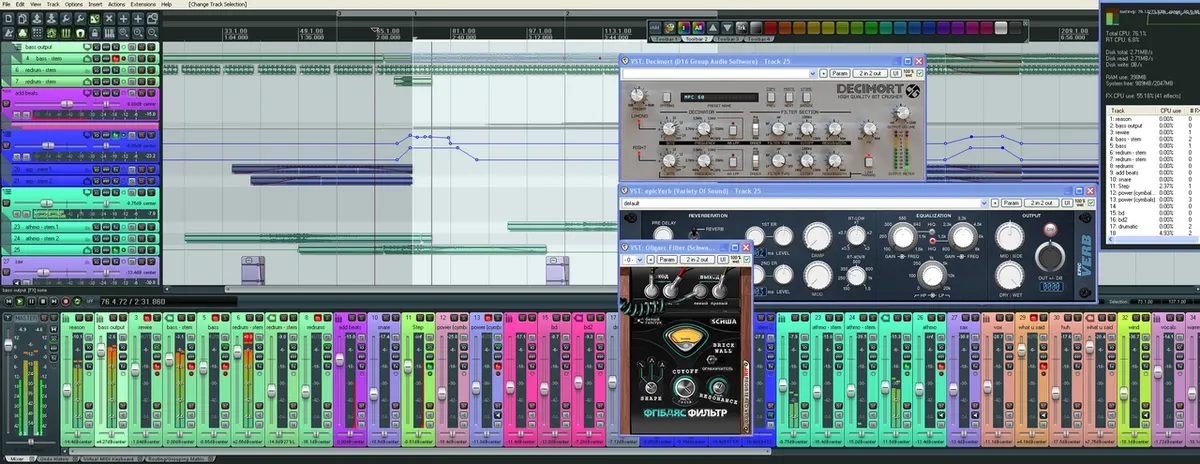
Every major DAW covers the basics: recording, editing, mixing and exporting. These matter more than the ranking.
| Question | What to consider |
|---|---|
| Your computer | Logic Pro and GarageBand are Mac only. On Windows, choose from the rest |
| The music you make | Songs and bands: strong recording and editing. Loops and beats: strong sequencing and loops (Ableton Live, FL Studio and others) |
| Who can help you | Using the same DAW as the people and tutorials around you makes getting unstuck much faster |
| Can you try it free? | GarageBand (Mac) is free. Many DAWs also come as light editions bundled with interfaces, or as free trials |
If you can’t decide, make the same song in the free or trial versions. Whether the screen makes sense to you and whether it suits your hands is not something any number can tell you.
Summary
- In surveys of Japanese producers, Cubase is first, followed by Studio One and Logic Pro.
- In a survey of recording and mixing pros, Pro Tools is first.
- The answers differ because the audiences differ. Read every number with who was asked.
- Choose by computer, the music you make, the help around you, and whether you can try it free.
Once you have a DAW, the whole workflow is in where to start.